.png)
Why Guided Silence Changes the Way Stress Is Processed

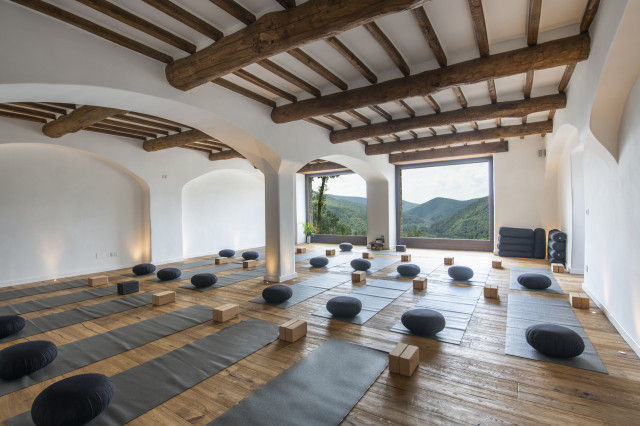
Silence is often associated with rest. When life becomes overwhelming, many people instinctively seek quiet — fewer demands, fewer conversations, fewer obligations. Yet silence alone is not always restorative. For some, unstructured silence can even feel uncomfortable or destabilizing. What makes the difference is not only the absence of noise, but the presence of guidance and structure. Guided silence transforms how stress is processed. Stress is not only created by external pressure. It is maintained by internal activation — continuous thinking, emotional tension, anticipatory worry, and unresolved reactions stored in the nervous system. When stimulation stops but the inner activity continues, the stress response remains active. The body is quiet, but the system is not at rest.
Unguided silence often leaves people alone with mental overactivity. Thoughts loop. Concerns expand. Emotional discomfort surfaces without containment. Without a framework, the mind tends to reproduce the same stress patterns even in a calm environment. Guided silence works differently. It introduces intentional structure into stillness. Through facilitated practices — such as guided reflection, therapeutic prompts, breathing regulation, and attention direction — the nervous system receives signals of safety and orientation. Instead of drifting into rumination, attention is gently anchored and regulated.
From a psychological perspective, guided silence supports emotional processing. When individuals are helped to observe their internal state with direction and safety, emotions can be identified and integrated rather than avoided or amplified. This reduces internal pressure instead of merely postponing it. There is also a physiological effect. Structured quiet practices combined with guided breathing and awareness techniques support parasympathetic activation — the branch of the nervous system associated with recovery and regulation. This is where real restoration occurs: heart rate slows, muscular tension decreases, and cognitive intensity softens.
Guided silence also improves clarity. When mental input is reduced and attention is supported rather than scattered, perception reorganizes. Priorities become more visible. Emotional signals become more readable. Decisions feel less reactive and more grounded. This is why many people report that their most important insights emerge not during intense discussion, but during well-held quiet reflection.
In structured retreat settings, guided silence is not imposed — it is facilitated. Participants are not left alone with their thoughts without support. Instead, silence is framed, paced, and integrated into a broader therapeutic and coaching process. Alternation between guided sessions and reflective quiet allows both processing and stabilization.
Importantly, guided silence is not withdrawal from reality. It is a method of recalibrating the stress response so that engagement with reality becomes steadier and more intentional. It creates space between stimulus and reaction — and in that space, regulation becomes possible.
When silence is guided, it becomes active rather than empty. It becomes a tool for nervous system recovery, emotional integration, and cognitive clarity. Instead of simply escaping noise, individuals learn to reset their internal response to pressure. In this way, guided silence does not just reduce stress temporarily — it changes how stress is processed at its roots.

Comments